

Roofing work involves more than removing old shingles and placing new ones. A typical project includes planning, inspection, material delivery, tear-off, repairs, installation, ventilation, cleanup, and final review. Understanding each stage helps homeowners recognize what should happen, what can cause delays, and which details deserve attention.
What happens before roofing work begins?
The process starts with an evaluation of the existing roof, the home’s design, and the conditions around the property. The roof’s age, slope, covering material, flashing, ventilation, gutters, and visible signs of moisture all affect the work plan.
A useful pre-project review usually considers:
- The number of roof layers already installed
- Areas with curling, missing, cracked, or loose roofing materials
- Soft decking or sagging sections
- Chimneys, plumbing vents, skylights, and wall intersections
- Attic insulation and ventilation
- Tree limbs or nearby structures that may affect access
- Expected weather during the installation period
In Granville, NY, seasonal conditions are especially relevant. Snow, ice, freeze-thaw cycles, wind, and summer heat can all affect roofing materials and the timing of the work. A roof may look acceptable from the ground while hidden damage is present around valleys, eaves, or penetrations.
Homeowners should also confirm how materials will be delivered, where vehicles or equipment may be placed, and how landscaping, outdoor furniture, and other property features will be protected.
How is the existing roof removed?
Most replacement projects begin with a controlled tear-off. Workers remove the old roofing layers, underlayment, flashing that cannot be reused, and damaged accessories. The removed material is collected as the work progresses rather than left spread across the property.
Tear-off is a revealing stage because the roof deck becomes visible. The deck is the structural surface beneath the roofing system, often made from plywood or oriented strand board. It must be reasonably sound before new materials are installed.
During removal, concealed problems may appear, including:
- Water-stained or weakened decking
- Rot near roof edges or valleys
- Rusted or poorly placed flashing
- Evidence of repeated leaks
- Inadequate ventilation openings
- Multiple old roofing layers adding unnecessary weight
Not every dark stain means the deck must be replaced, and not every old roof has serious hidden damage. The condition should be evaluated based on strength, moisture, and the way the affected area will support the new system.
What repairs are made before new materials go on?
Necessary repairs should be completed before the roof covering is installed. Installing new shingles or other roofing materials over a weak surface can shorten the life of the entire system and conceal problems that become more difficult to correct later.
Roof deck repairs may involve replacing only damaged panels rather than removing large sections. Other repairs may address roof edges, valleys, flashing, fascia, or areas around vents and chimneys.
Flashing deserves particular attention. It directs water away from vulnerable joints where two roof surfaces meet or where the roof intersects with another structure. Common flashing locations include:
- Chimney sides and upper edges
- Valleys between sloping roof sections
- Plumbing vent openings
- Wall-to-roof intersections
- Skylights and dormers
- Eaves and roof edges
A roof does not fail only because of worn surface material. Water often enters at transitions, fasteners, edges, or penetrations.
How is the roofing system installed?
After repairs, the installation typically proceeds from the lower roof edge upward. The exact sequence depends on the roofing material, but the system commonly includes edge protection, underlayment, flashing, field material, and ridge or upper-slope components.
Underlayment forms a secondary water-shedding layer beneath the exposed roof covering. It cannot replace proper roofing material, but it provides additional protection if water passes beneath shingles or similar units.
At the roof edge, specialized materials help protect against water intrusion and wind-related damage. In colder climates, some roof designs also require protection in areas vulnerable to ice dams. Ice dams can form when heat escapes into the attic, melts snow on the upper roof, and allows water to refreeze near colder eaves.
Roofing materials must be installed with the correct spacing, overlap, alignment, and fastening pattern. Small installation errors can create larger problems during wind, heavy rain, or repeated freeze-thaw cycles.
Why do ventilation and insulation matter?
A roof covering alone does not control attic temperature or moisture. Proper attic ventilation allows heat and moisture to move out of the attic while replacement air enters through designed intake areas.
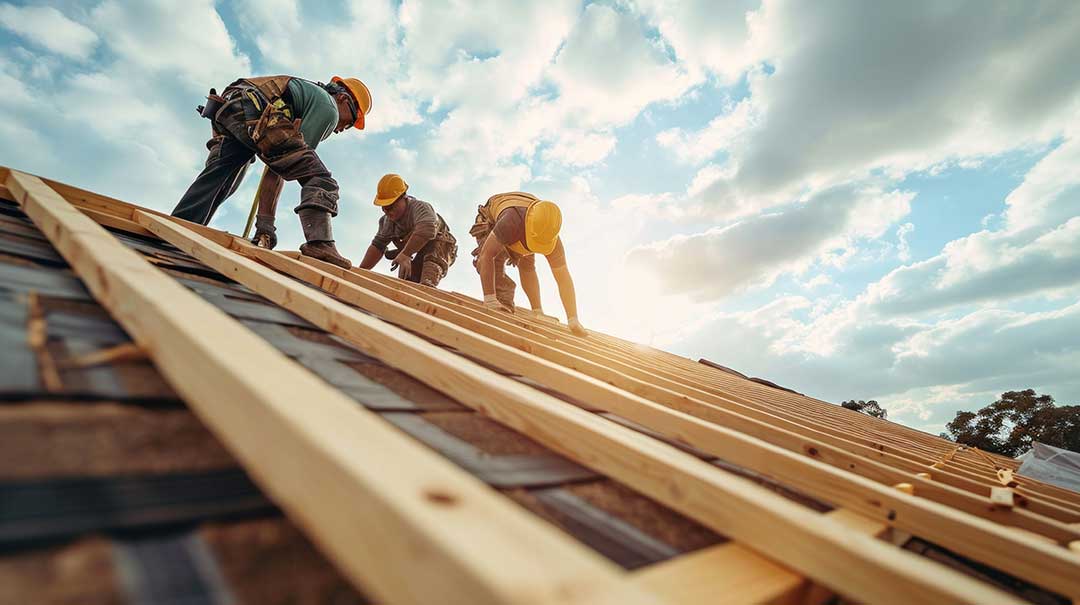
Poor ventilation can contribute to:
- Condensation on roof framing
- Damp insulation
- Mold or mildew growth
- Premature aging of roofing materials
- Ice dam formation
- Higher summer attic temperatures
Ventilation cannot solve every moisture problem. Bathroom fans that discharge into the attic, air leaks from the living space, and insufficient insulation may also contribute to condensation. A roofing project is an opportunity to identify these conditions, although correcting them may involve work beyond the roof covering itself.
How is the roof inspected after installation?
A final inspection should look beyond whether the roof appears neat from the ground. The review should include exposed fasteners, flashing, roof edges, valleys, vents, ridge details, gutters, and areas where the roof meets walls or other structures.
Cleanup is also part of the process. Roofing debris can include small metal fragments, backing material, nails, and pieces of old roofing. Ground-level cleanup should include walkways, driveways, garden edges, and areas near exterior walls. Even with careful work, homeowners may wish to inspect outdoor areas after the first rainfall and again after snow removal.
If local permits or inspections apply, those requirements are separate from a visual cleanup review. Rules can vary by jurisdiction and by the scope of the project, so property owners should verify requirements before work begins.
How long does a roofing project take?
A straightforward roof replacement may take a relatively short period, while a complex roof can require more time. The schedule depends on roof size, pitch, number of layers, decking repairs, material type, access, ventilation changes, and weather.
In the region’s colder seasons, temperature and precipitation can affect material handling and site safety. Rain can interrupt exposed-roof work, and snow or ice may make roof access unsafe. A delay does not automatically indicate poor planning; protecting the uncovered roof and waiting for safe conditions may be necessary.
Homeowners can reduce disruption by moving vehicles, securing outdoor objects, trimming back accessible branches when appropriate, and keeping children and pets away from the work area.
What signs suggest a problem after the work is finished?
Some conditions deserve prompt attention after installation:
- Water stains or active dripping in the attic
- Missing, lifted, or visibly damaged roofing materials
- Exposed fasteners or gaps around flashing
- Sagging roof areas
- Persistent dampness or strong musty odors
- Excessive granules collecting in gutters after the initial settling period
- Debris left in drainage paths
A single small amount of loose material may occur during cleanup, but continuing debris, leaks, or movement in the roof surface should not be ignored. Roof access is hazardous, particularly during wet, icy, or windy conditions. Observations from the ground or attic are safer than climbing onto the roof.
Understanding the roofing process makes it easier to evaluate the work objectively. The visible covering is only one part of a complete roof system; the condition of the deck, flashing, underlayment, ventilation, drainage, and surrounding structure all influence how well the roof performs through Granville’s changing seasons.
